
Animals, Pets & Aspergillosis
ANIMALS AT-RISK
CLINICAL SIGNS & SYMPTOMS
There are two forms of Aspergillosis that can affect your pet. The first form affects the nose and sinuses, and the second form affects organs outside of the nose. There can be an overlap between clinical signs and symptoms of sinonasal and disseminated disease:
- Nasal discharge
- Sneezing
- Decreased activity and appetite
- Weight loss
- Fever
- Limping
- Skin lesions
- Drinking/urinating more
- Neurologic signs (trouble walking, back pain, seizures)
Consult your veterinarian if you have any questions.
Understanding Fungal Infections Affecting Your Pet
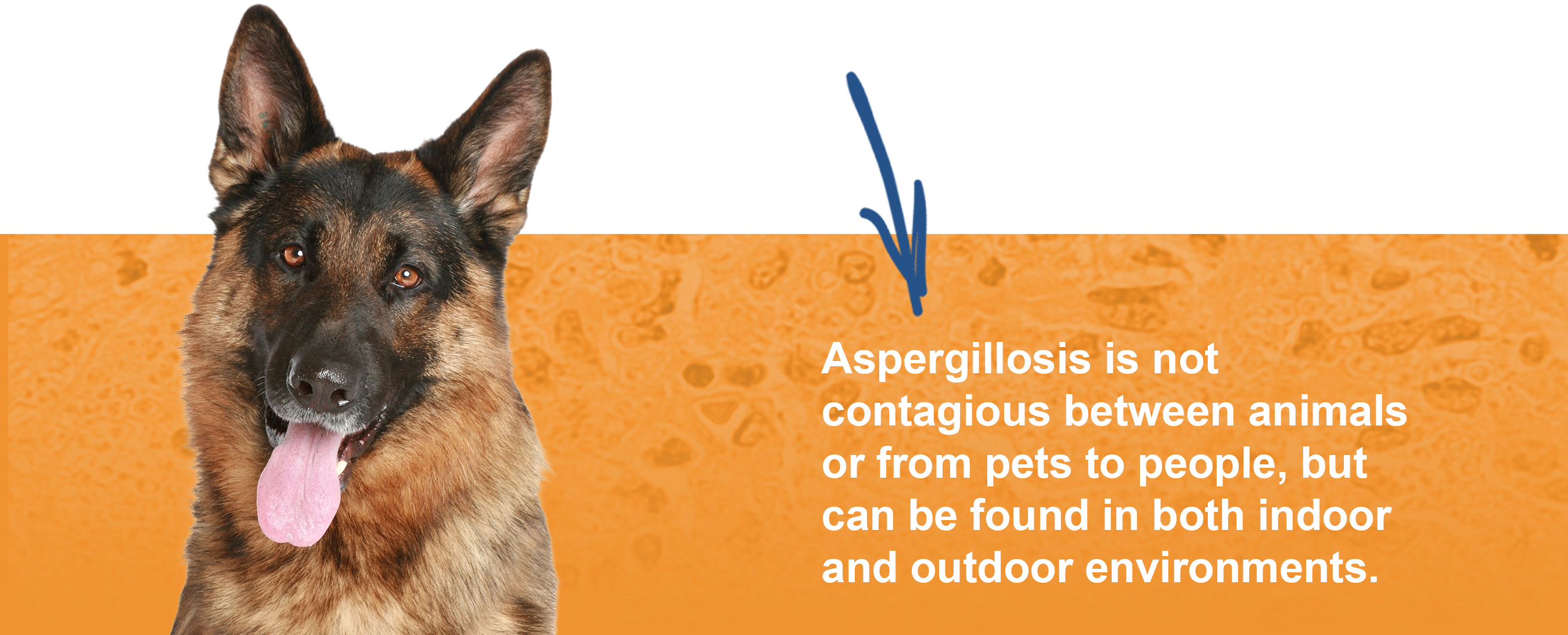
If your pet has recently been diagnosed with aspergillosis,
it’s essential to follow the direction of the veterinarian caring for your pet.
Aspergillosis is a potentially life-threatening fungal infection but can often be successfully treated with long-term antifungal medication.
Download a Printable Version
How Do Animals Contract Aspergillosis?
Aspergillosis is a fungal infection caused by Aspergillus, a common fungus found in both indoor and outdoor settings. People and animals with weakened immune systems are more susceptible to developing aspergillosis and additional health complications due to the infection. It is nearly impossible to avoid breathing in some Aspergillus spores in your home, but for those with a healthy immune system, it is often not harmful.
Aspergillus commonly grows on dead leaves, stored grain, compost piles, and other decaying vegetation. It can also be found as a lacy mold growing on foods. Fortunately, respiratory physical defenses (mucosa, branching airways, mucociliary apparatus) and innate immune system often limit invasion of the fungus thereby preventing infection.
How Is Aspergillosis Treated?
Treatment includes antifungal medication. This might be given orally at home or intravenously in the hospital, depending on the severity of illness. Other treatments might also be recommended based on the severity of illness and the location of infection within the body.
Aspergillosis Treatment Timeline and Veterinary Monitoring
Treatment duration is generally for 12 months or longer. It is important to give the antifungal medications as prescribed in order to provide the best chance for a full recovery. Improvements are slow initially, but most animals are noticeably improved at 1 month, and even better at 2 months. All medications have potential side-effects, and this is true for antifungal medications. Close monitoring for medication side-effects and for response during treatment is vital. This requires veterinary visits for repeat physical examinations, routine lab work, and antibody or fungal antigen testing.
Aspergillosis is difficult to completely clear, and some animals will need antifungal medication indefinitely. If antifungal treatment can be stopped, it is important to continue to watch for signs of illness and talk with your veterinarian if you have any concerns. Repeated veterinary recheck visits including physical examination, routine lab work, and antibody or fungal antigen testing is also important to help detect a relapse early. Like the initial infection, relapses are treated with antifungal medication.