
Animals, Pets & Cryptococcosis
ANIMALS AT-RISK
Both dogs and cats can be infected with cryptococcosis. While dogs are less likely to be infected as compared with cats, dogs are more likely to have abdominal organs affected, like the GI tract.
CLINICAL SIGNS & SYMPTOMS
In animals, common signs of a cryptococcosis infection include the following, which can be vague symptoms:
- Decreased appetite
- Decreased activity
- Weight loss
- Fever
- Nasal discharge
- Sneezing
- Skin lesions
- Vision loss
- Diarrhea
-
Changes to shape of nose
-
Neurologic signs (behavior changes, trouble walking, seizures)
Consult your veterinarian if you have any questions.
Understanding Fungal Infections Affecting Your Pet
If your pet has recently been diagnosed with cryptococcosis,
it’s essential to follow the direction of the veterinarian caring for your pet.
Cryptococcosis is a potentially life-threatening fungal infection but can often be successfully treated with long-term antifungal medication.
How Do Animals Contract Cryptococcosis?
When pets spend time outdoors, they may be exposed to Cryptococcus in dust and soil, especially in areas contaminated by bird droppings (including pigeons), bat guano, or decaying plant material. Routine behaviors such as sniffing, digging, or exploring leaf litter, rotting wood, woodpiles, barns, or damp soil can stir up fungal spores. Infection most often occurs when these airborne spores are inhaled.
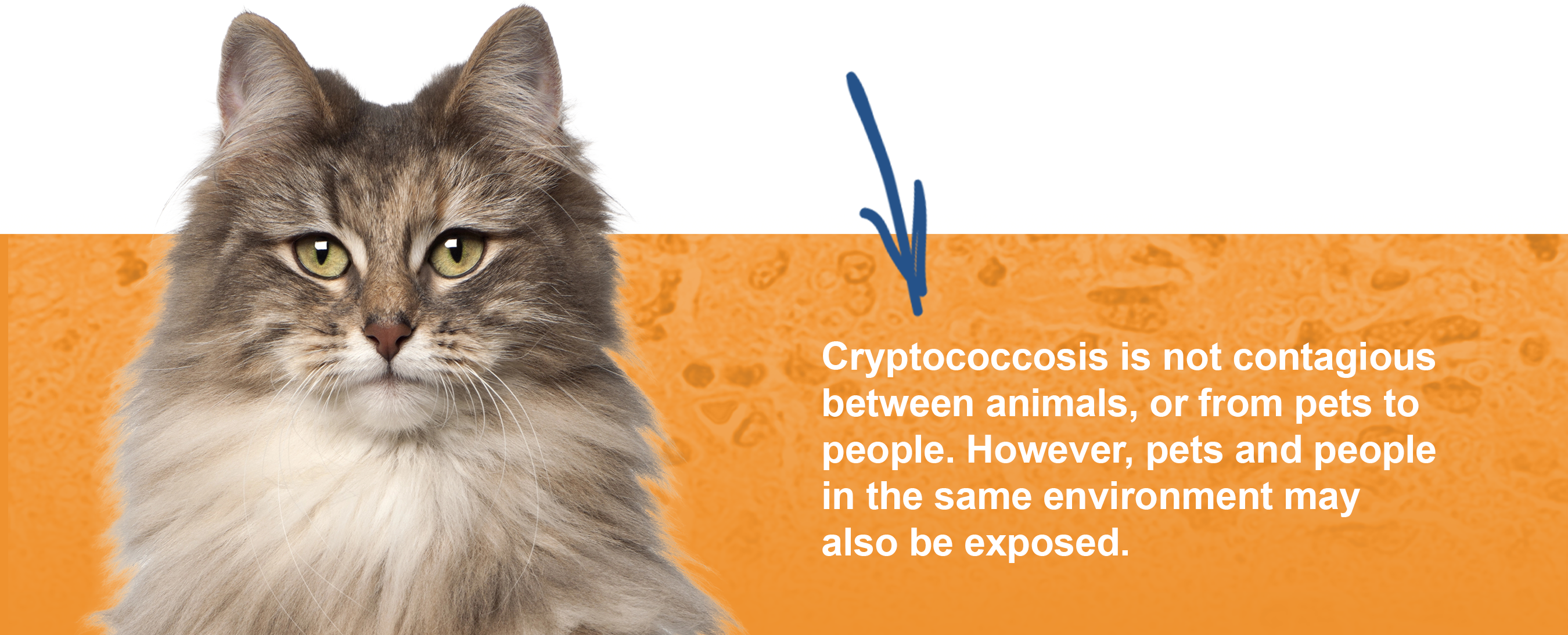
Even indoor-only cats can develop cryptococcosis, which suggests spores can occasionally be carried into the home (for example on shoes, clothing, or through open windows and ventilation). Because exposure can occur anywhere spores are present, other pets and people in the same environment may also be exposed. In some households, more than one pet may become infected over time.
Cryptococcosis, caused by Cryptococcus, is a fungal infection affecting primarily cats and dogs, but other animals can also be infected. Cryptococcosis is found worldwide and can be diagnosed anywhere in the U.S. and Canada. Infection ranges from life-threatening to mild. Infections can affect any organ, commonly including the nasal cavity, sinuses, eyes, lymph nodes, skin, and central nervous system. While dogs are less likely to be infected as compared with cats, dogs are more likely to have abdominal organs affected like the GI tract. Clinical signs can be vague (decreased appetite, decreased activity level, weight loss, and fever) or more specific (nasal discharge, sneezing, skin lesions, vision loss, or diarrhea). Diagnosis can be made by finding the fungi in body fluid or tissue samples or by testing blood for pieces of the fungus (antigen).
How Is Cryptococcosis Treated?
Treatment includes antifungal medication. This might be given orally at home or intravenously in the hospital, depending on the severity of illness. Other treatments might also be recommended based on the severity of illness and the location of infection within the body.
Cryptococcosis Treatment Timeline and Veterinary Monitoring
Treatment duration is for at least 6 months, though treatment is generally longer. It is important to give the antifungal medications as prescribed in order to provide the best chance for a full recovery. Many animals worsen over the first few weeks, before starting to get better. Improvements are slow initially, but most animals are noticeably improved at 1 month and even better at 2 months. All medications have potential side-effects, and this is true for antifungal medications. Close monitoring for medication side-effects and for response during treatment is vital. This requires veterinary visits for repeat physical examinations, routine lab work, and fungal antigen testing.
Understanding Potential Cryptococcosis Relapses
Cryptococcosis is difficult to completely clear, and return of the infection (relapse) after stopping antifungal medication is possible. After treatment, it is important to continue to watch for signs of illness and talk with your veterinarian if you have any concerns. Repeated recheck veterinary visits including physical examination, routine lab work, and fungal antigen testing is also important to help detect a relapse early. Like the initial infection, relapses are treated with antifungal medication.