
Animals, Pets & Pythiosis
ANIMALS AT-RISK
Pythiosis primarily affects dogs, but cats and other animals can also be infected. Young animals (<5 years) are most commonly infected.
CLINICAL SIGNS & SYMPTOMS
Pythiosis most often causes disease of the skin or GI tract. In animals, common signs of GI pythiosis can include:
- Vomiting
- Diarrhea
- Blood in the stool
- Straining to defecate
- Weight loss
- Decreased appetite
- Decreased energy
Common signs of skin pythiosis in animals can include:
- Non-healing wounds that ulcerate and have draining tracts (small holes with fluid coming out)
- Masses below the skin without ulcers or draining tracts (unique to cats)
Consult your veterinarian if you have any questions.
Understanding Fungal Infections Affecting Your Pet
If your pet has recently been diagnosed with pythiosis,
it’s essential to follow the direction of the veterinarian caring for your pet.
Pythiosis is not contagious in other animals or humans. The infection can be treated
with medical treatment consisting of antifungal medication and anti-inflammatory medications, or a combination of medical treatment and surgical resection (removal).
How Do Animals Contract Pythiosis?
Pythiosis, caused by Pythium, is a fungal-like infection affecting primarily dogs, but cats and other animals can also be infected. Pythiosis is found on multiple continents around the world, and it can be diagnosed anywhere in the U.S. Pythium likes warm temperatures, and it is most common in southern states.
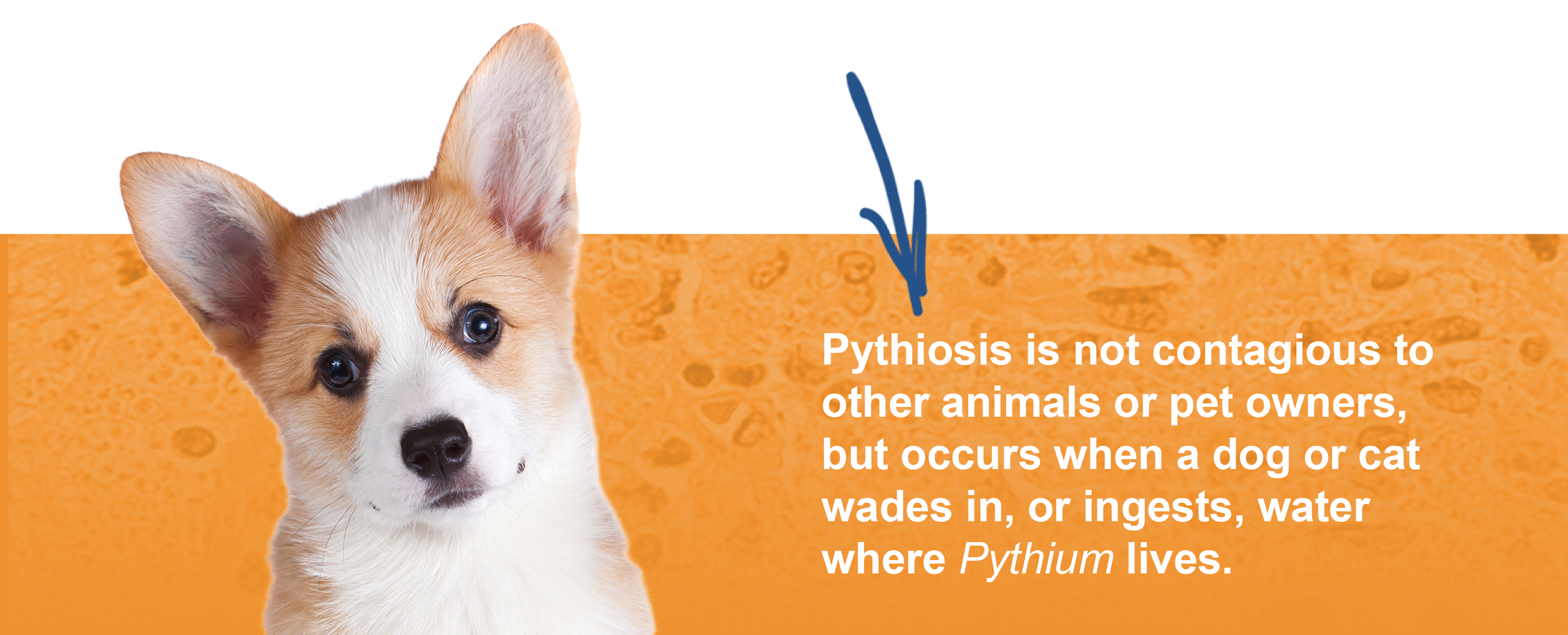
Pythiosis is not contagious to other animals or humans, but occurs when a dog or cat wades in, or ingests, water where Pythium lives. Pythiosis most commonly infects young animals (<5 years), which could be due to the fact that they are more likely to roam around and wade in water.
What Does Pythiosis Look Like?
Infection most often causes disease of the skin or GI tract. While cats are less likely to be infected as compared with dogs, it is important to consider pythiosis in both species.
Clinical signs of GI pythiosis can be vomiting, diarrhea, blood in the stool, straining to defecate, weight loss, and decreased appetite and energy. Animals can have GI pythiosis for months without any signs.
Skin pythiosis causes non-healing wounds that ulcerate and have draining tracts (small holes with fluid coming out). These are most common on the limbs, belly, and on the rear end, but can occur on any location. Cats can have masses below the skin (sub-cutaneous) without ulcers or draining tracts.
How Is Pythiosis Treated?
Treatment for skin pythiosis typically includes surgical resection (removal). This is followed by medical treatment. Medical treatment includes a combination of antifungal and anti-inflammatory medications.
Some cases of GI pythiosis don’t require surgery.
Pythiosis Treatment Timeline and Veterinary Monitoring
Medications are given long term regardless of surgery, generally for at least 1 year. Improvements are slow initially, but most animals have noticeable improvements at 1 month and even more at 2 months. All medications have potential side-effects, and this is true for antifungal and anti-inflammatory medications. Close monitoring for medication side-effects and for response to treatment is vital. This requires veterinary visits for repeat physical examinations and routine lab work. In addition, a blood test (Pythium antibody) can be used to help monitor treatment. Antibody levels decrease with successful treatment and normalize as the disease resolves. The same test is used whether surgery plus medical or just medical treatment is needed.
Understanding Potential Pythiosis Relapses
Pythiosis is difficult to completely clear. When antifungal treatment can be stopped, it is important to continue to watch for signs of illness and talk with your veterinarian if you have any concerns. Repeat recheck veterinary visits including physical examination, routine lab work, and antibody testing is important to help detect a relapse. Like the initial infection, relapses are treated with antifungal and anti-inflammatory medication.